What Does Wealth Mean in Vedic Astrology?
॥ Hari Sarvottama Vāyu Jīvottama ॥
Dhana Is More Than Money
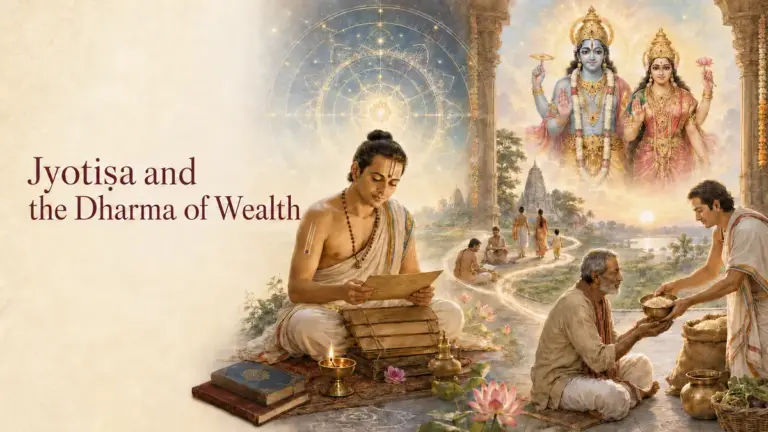
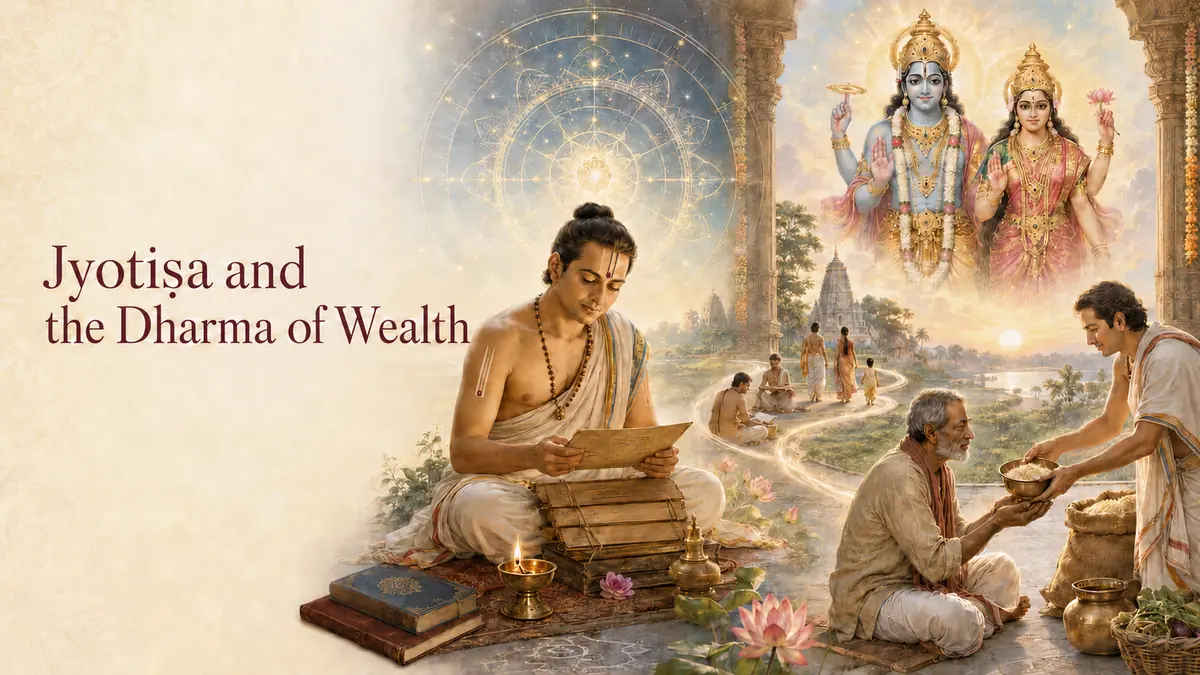
Jyotiṣa and the Dharma of Wealth | Article 1
Understanding Dhana, Karma and Dāna through Vedic Astrology
When people consult an astrologer about wealth, their questions are often direct:
Will I become wealthy? When will my finances improve? Does my horoscope contain a Dhana Yoga?
These are understandable concerns. Money provides security, supports our families and enables us to fulfil many responsibilities. Yet Vedic Astrology invites us to examine wealth through a much wider lens.
In Jyotiṣa, Dhana is not merely the money held in a bank account. It includes the resources, abilities, relationships, opportunities and values entrusted to us—and the manner in which we use them.
A horoscope may indicate the possibility of earning or accumulating wealth. Dharma determines whether that wealth becomes a source of peace, responsibility and Seva.
The Many Forms of Wealth
The Sanskrit word Dhana generally refers to wealth or valuable possessions. But true prosperity can manifest in several forms:
- Financial stability and material resources
- Food, shelter and physical security
- Knowledge, intelligence and useful skills
- Good health and the ability to work
- Supportive family and relationships
- Honour, credibility and goodwill
- Contentment and emotional steadiness
- Opportunities to serve society and Dharma
- Devotion and spiritual understanding
A person may possess considerable money yet live with anxiety, conflict or dissatisfaction. Another may have modest financial resources but enjoy health, family harmony, knowledge, respect and contentment.
Who, then, is truly wealthy?
Jyotiṣa does not offer a single answer based on one planetary placement. It examines the complete pattern of life.
Wealth Is Entrusted, Not Absolutely Owned
The Īśāvāsya Upaniṣad begins with a profound teaching:
ईशावास्यमिदं सर्वं यत्किञ्च जगत्यां जगत् ।
तेन त्यक्तेन भुञ्जीथा मा गृधः कस्यस्विद्धनम् ॥Īśāvāsyam idaṁ sarvaṁ yat kiñca jagatyāṁ jagat,
tena tyaktena bhuñjīthā mā gṛdhaḥ kasya svid dhanam.
“All this—whatever moves within this universe—is pervaded and governed by the Lord. Enjoy what has been allotted with a spirit of detachment; do not covet, for to whom does wealth truly belong?”
— Īśāvāsya Upaniṣad 1
This verse does not ask us to reject material resources. It asks us to change our relationship with them.
We may earn, preserve and enjoy wealth—but with the awareness that we are not its absolute owners. Our resources exist within the divine order governed by Sri Hari and are entrusted to us for responsible use.
This understanding replaces possessiveness with gratitude.
Śrī Is Greater Than Material Riches
In the Bhagavad Gītā, Śrī Kṛṣṇa declares:
कीर्तिः श्रीर्वाक्च नारीणां स्मृतिर्मेधा धृतिः क्षमा ॥
Kīrtiḥ śrīr vāk ca nārīṇāṁ smṛtir medhā dhṛtiḥ kṣamā.
“Among feminine qualities, I am fame, prosperity, speech, memory, intelligence, steadfastness and patience.”
— Bhagavad Gītā 10.34
Here, Śrī represents splendour, auspiciousness and prosperity. It should not be reduced to currency alone.
Mahālakṣmī’s grace may manifest as nourishment, wisdom, courage, harmony, good character, children, opportunity, protection and the ability to support a worthy purpose. Money is only one visible expression of a much greater divine abundance.
Therefore, when assessing prosperity through Jyotiṣa, we must ask not only, “How much can this person earn?” but also:
What forms of Śrī have been granted to this life?
How Jyotiṣa Examines Dhana
No single house or planet independently determines wealth. Several areas of the horoscope work together.
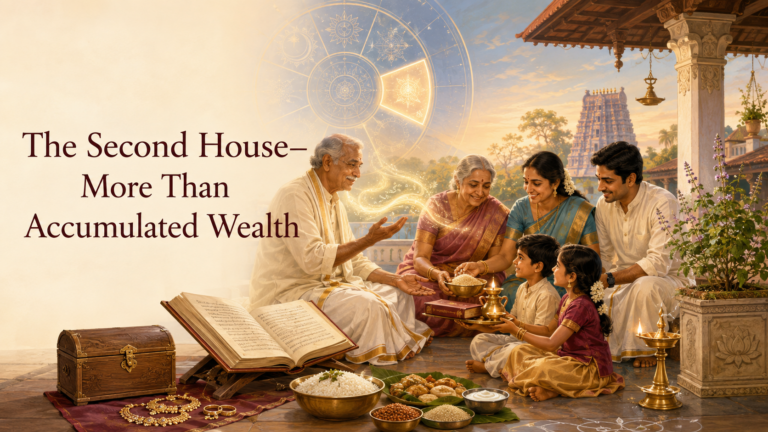
The Second House—What We Possess and Preserve
The second house is traditionally associated with accumulated wealth, family, food, speech, knowledge and values.
This itself carries a profound message: wealth is connected not only with money, but also with what nourishes us, what we learn from our family and how we use our words.
A person’s speech can create opportunities or destroy trust. Family values may help preserve wealth—or lead to its misuse. Knowledge can remain valuable long after material possessions disappear.
The Eleventh House—Gains and Fulfilment
The eleventh house represents gains, income, networks, aspirations and the fulfilment of desires.
Yet gaining what we desire does not automatically create contentment. A strong desire for continual acquisition may generate income while simultaneously increasing restlessness.
The eleventh house must therefore be understood alongside the houses governing wisdom, Dharma and inner fulfilment.
The Tenth House—Work and Contribution
The tenth house indicates Karma, profession, responsibility and one’s visible contribution to society.
Wealth generally arises through some form of action—work, leadership, knowledge, enterprise, creativity or service. Thus, our resources cannot be separated from the responsibilities through which they are earned.
The Ninth House—Dharma and Grace
The ninth house represents Dharma, Guru, higher wisdom, blessings and fortune.
It helps us understand whether prosperity is accompanied by gratitude, ethical judgment and a willingness to use our blessings responsibly.
When Dhana remains connected to Dharma, wealth becomes a means of sustaining family, learning, tradition and Seva.
The Planets Are Not Independent Givers
Different Grahas may signify various dimensions of prosperity. Guru is associated with wisdom, expansion and abundance; Śukra with comforts and refinement; Budha with intellect, trade and communication; and Śani with labour, discipline and endurance.
However, from the Madhwa understanding, the Grahas are not independent dispensers of destiny.
Sri Hari alone is Sarvottama and completely independent. The Grahas function within the divine order established and governed by Him. They indicate the unfolding of Karma; they do not operate beyond His authority.
A horoscope is therefore not a certificate guaranteeing wealth. It is a sacred map showing tendencies, opportunities, strengths, challenges and the possible timing of experiences.
A Dhana Yoga Is Potential, Not a Promise
The presence of a Dhana Yoga is often celebrated without examining the complete horoscope.
But an astrological Yoga must be studied along with:
- The strength and condition of the planets involved
- The houses they own and occupy
- Supporting and conflicting influences
- The relevant Daśā and Bhukti
- The person’s circumstances and choices
- Consistent effort and practical judgment
- The operation of Karma and divine grace
A seed may contain the potential to become a tree. Yet it still requires suitable soil, water, sunlight and care.
Similarly, a Dhana Yoga indicates potential. It does not justify exaggerated promises of effortless riches.
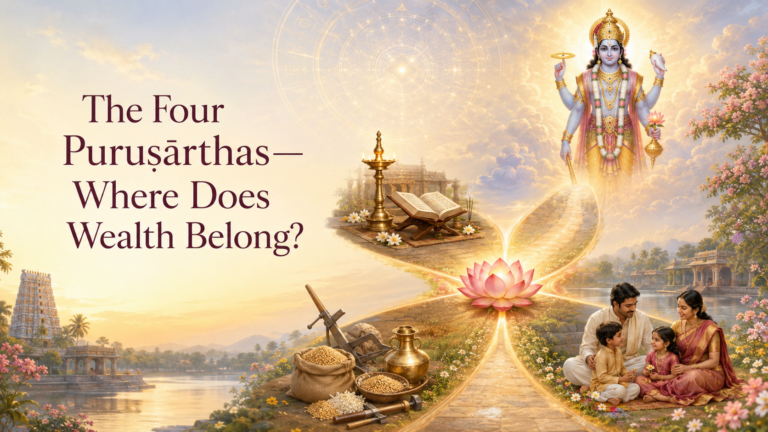
Artha Must Be Guided by Dharma
Sanātana Dharma recognises Artha—the pursuit of material security—as a legitimate human objective. Earning wealth is not inherently unspiritual.
A Gṛhastha must provide for the family, educate children, care for elders, fulfil social and religious obligations, welcome guests and support dhārmic institutions. These responsibilities require material resources.
The danger arises when Artha is separated from Dharma.
Wealth obtained through exploitation, dishonesty or harm may increase possessions, but it cannot represent complete prosperity. Similarly, money used only to enlarge ego and attachment may fail to provide lasting contentment.
Śrī Kṛṣṇa declares:
धर्माविरुद्धो भूतेषु कामोऽस्मि भरतर्षभ ॥
Dharmāviruddho bhūteṣu kāmo’smi Bharatarṣabha.
“I am desire in beings that is not opposed to Dharma.”
— Bhagavad Gītā 7.11
The pursuit of prosperity is therefore not rejected. It must remain within the boundaries of Dharma.
From Dhana to Dāna
The highest purpose of wealth is not accumulation alone.
Dhana sustains our life and responsibilities. When a portion is willingly directed towards a righteous purpose, it becomes Dāna. When Dāna is offered with śraddhā, humility and without expectation, it becomes Seva.
The Bhagavad Gītā identifies Dāna itself as one of the divine qualities:
अभयं सत्त्वसंशुद्धिर्ज्ञानयोगव्यवस्थितिः ।
दानं दमश्च यज्ञश्च स्वाध्यायस्तप आर्जवम् ॥Abhayaṁ sattva-saṁśuddhir jñāna-yoga-vyavasthitiḥ,
dānaṁ damaś ca yajñaś ca svādhyāyas tapa ārjavam.
“Fearlessness, purity of mind, steadfastness in knowledge and Yoga, charity, control of the senses, sacrifice, study of sacred knowledge, austerity and straightforwardness…”
— Bhagavad Gītā 16.1
Dāna is therefore not merely a financial transaction. It is a divine quality that purifies our relationship with wealth.
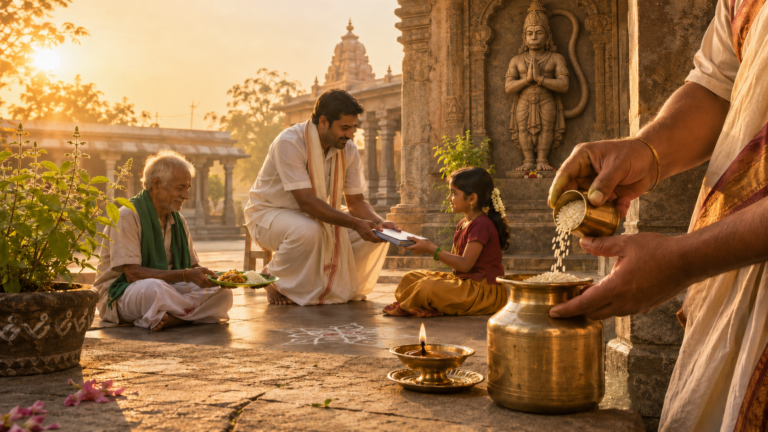
This does not mean that everyone must give the same amount or in the same way. One may offer money, another food, another knowledge, another time and another physical effort.
What matters is recognising that whatever Sri Hari has placed in our hands carries a responsibility beyond personal consumption.
A Thought to Carry with Us
When examining wealth—whether through a horoscope or through our own life—we may ask:
What has Sri Hari entrusted to me, and how am I using it?
Our greatest Dhana may not always appear in our financial statements. It may be the knowledge we can teach, the food we can share, the family values we preserve, the time we offer, or the opportunity we create for another person.
Jyotiṣa can help us recognise the forms of wealth present in our lives.
Dharma teaches us how to use them.
Dāna allows us to share them.
And Seva offers them back to Sri Hari.
॥ Śrī Kṛṣṇārpaṇamastu ॥
Coming Next
Article 2: The Four Puruṣārthas—Where Does Wealth Belong?
In the next article, we shall explore why Artha is a valid and necessary pursuit—and why it must remain guided by Dharma rather than becoming the sole purpose of life.
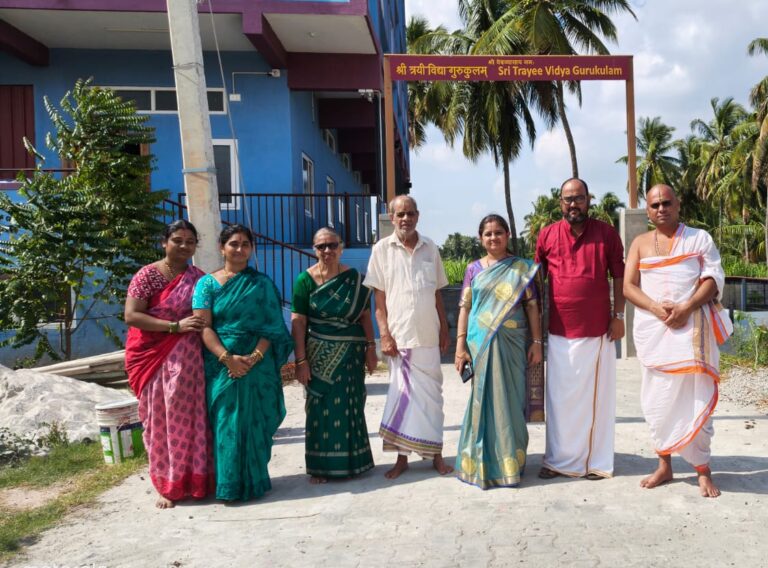
Astrology consultation fees received through AstroYathra support the spiritual, educational, Dāna and Seva initiatives undertaken by Bhaktha Anjaneya Astrology Research and Seva Trust.